
By Rebeca Souza
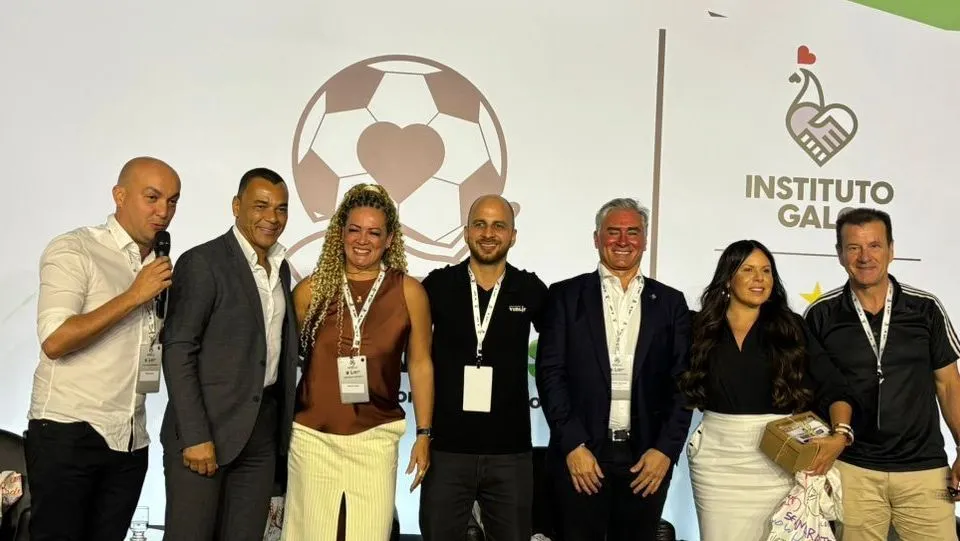
World Cup winners Cafu and Dunga participated in Futcon and ESG, the 1st International Football & ESG Congress (Photo: Jeovana Oliveira/CNN)
The ESG agenda refers to the adoption of responsible practices related to environmental issues, social impact and corporate governance. In this context, football clubs cannot ignore the need to implement actions that help reduce the challenges and negative impacts connected to these three dimensions.
In Brazil, adherence to ESG practices has grown steadily in recent years. According to a survey by the American Chamber of Commerce (AMCHAM), by the end of 2024, 71% of Brazilian companies had already adopted sustainable practices. Football clubs have had to keep pace with this movement. Today, there is a wide range of initiatives addressing local, regional and national challenges.
Partnerships across sectors are essential for building long-term solutions. For example, Arena ESG, a nonprofit organization, promotes what it describes as a “movement that drives social transformation through football and ESG practices” according to its official website.
São Paulo Futebol Clube has committed to fighting racial discrimination. In 2022, the club partnered with the Observatory of Racial Discrimination in Football to develop initiatives aimed at raising awareness and educating its audiences, strengthening efforts to combat structural racism in Brazil through the sport. This initiative falls under the Social pillar of the ESG framework.
Each club plays its own social and environmental role. Larger clubs such as Clube de Regatas do Flamengo have had a structured ESG department in place since 2019, with the goal of “encouraging the full development of people living in socially vulnerable contexts.” Guided by four main pillars: Education, Social inclusion and diversity, Quality of life, and Sustainable use of resources, the club runs projects that bring communities in vulnerabilities to matches, promotes recycling, circular economy initiatives and develops anti-racism programs.
Smaller clubs are also leading by example
Smaller clubs are also part of this movement. Avaí Futebol Clube, based in the southern state of Santa Catarina, promotes human development through its institute, created in 2009. The club integrates sport, culture, education and social inclusion in its programs. Meanwhile, Fortaleza Esporte Clube, located in the northeastern state of Ceará, stands out for its strong community engagement in underserved neighborhoods.
The topic has gained significant relevance within the sector. Evidence of this was the first “Futcon & ESG – International Football and ESG Congress” organized by Clube Atlético Mineiro at Arena MRV, a stadium recognized for its socio-environmental development standards. In 2024, the club was also ranked among the world’s most sustainable football clubs and carried out social initiatives through Instituto Galo.
The congress was created to discuss ESG in football in practical terms, connecting the culture of the sport with social and environmental priorities. In addition to featuring well-known figures, the event has increased visibility for social causes and community-driven movements. During the congress, Fortaleza Esporte Clube presented a case study highlighting its own ESG initiatives.
In Brazil, football goes far beyond the game itself, it is deeply woven into the country’s culture. There is still much work to be done, but implementing long-term programs and responsible practices that benefit society and the planet can lead to broader adoption and greater impact across other actors and sectors.