
By Yuri Coghe
With files from Agência Brasil

When the Brazilian Football Confederation (CBF) released the calendar for Brazilian men’s professional football for the 2026 season, many local fans celebrated. Two highlights of the announcement, made during an event in October in Rio de Janeiro, were the much-requested reduction in the number of state championship dates and the extension of the Brazilian Championship. Here’s why that’s a big deal.
A bit of context here: since Brazil is a gigantic country, state championships became a thing way before a national championship was even created. The São Paulo State Championship (Campeonato Paulista), popularly known as the Paulistão, started in 1902, for instance. In comparison, the tournament that’s currently considered the first national championship was held only in 1959. The reasoning is quite simple. Back then, it was way easier to play clubs near you than to travel across the country.
While that system created legendary clubs, rivalries and a football culture across the whole nation, it was widely accepted by fans and the media that it had became stale. Playing State Championships from January to April and having to wait three or four months into the season for the national league to kick in, with all its glamour and flair, was just not attractive anymore. It felt ike the season started with what matters least, and you can’t help but wait for the real thing to start.
Enter the big change. Starting in 2026, the Brazilian Championship (Campeonato Brasileiro) kickoff will be moved to January 28th, and it will only wrap up on December 2nd. The calendar accommodates a break for the FIFA World Cup. Other than having the league everyone in Brazil actually wants to watch active from January to December, another big win was in sight.
The state championships will have fewer dates on the national football calendar, going from 16 to 11. A massive win for those who thought eliminating minutes of less-important games would result in an improved calendar and more rested players. Every State Championship in Brazil will now have to be played from January 11th to March 8th. No exceptions.
Brazil cup gets bigger — finally
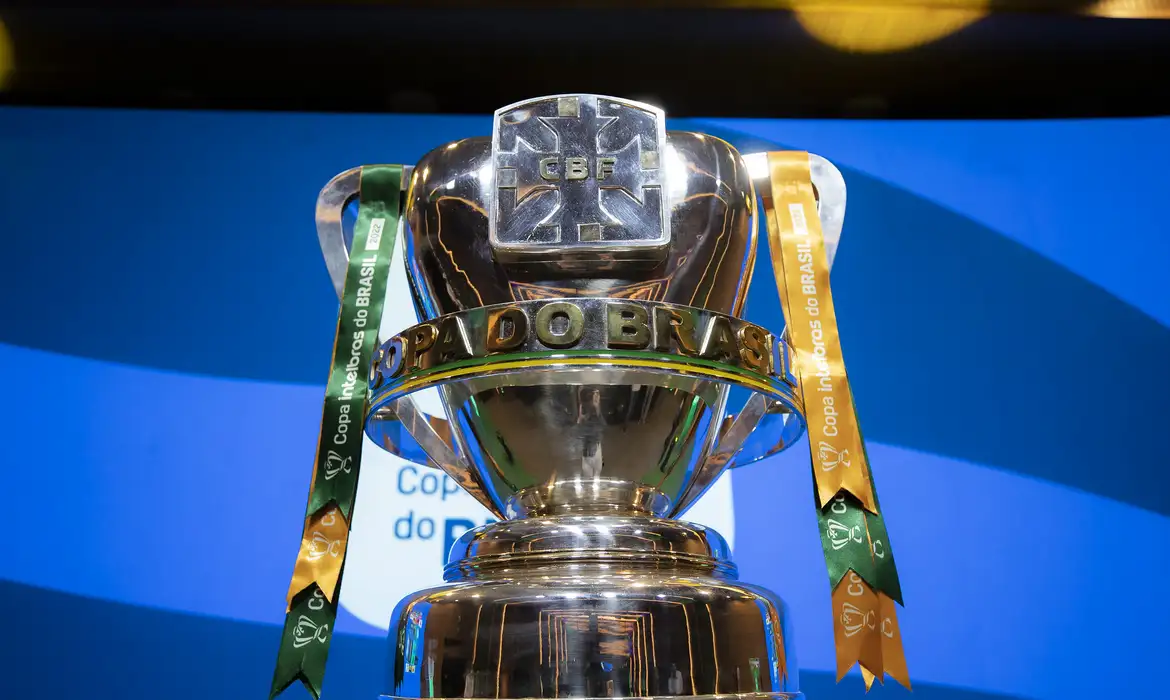
Could the calendar change be even better than that? Yes. It could, and it was. Let’s focus on the Brazil Cup (Copa do Brasil), which is obviously the same as the FA Cup in England or the Copa del Rey in Spain. When you think of the total of 745 teams playing in the 2024/25 FA Cup, the old number of 92 Brazilian teams taking part in their domestic cup seems ridiculous, even. From the 2026 edition of the tournament onward, the number of participants increased significantly, rising from 92 to 126 clubs. Consequently, the tournament will see an expansion in the number of matches, going from 122 to 155. While it could use another expansion soon, it’s definitely a step in the right direction.
Another big change: no two-legged finals anymore. Following the trend of several other competitions, such as the Copa Libertadores and the UEFA Champions League, the Brazil Cup final will be played in a single match on December 6th. The competition will begin on February 18th.
The Brazilian Football Confederation (CBF) stated that the main objective of the changes “is to guarantee more rationality and balance to the calendar, offering more games to the base of the pyramid of Brazilian football, and reducing the number of matches played by Série A clubs.”
“We have taken the first step in reducing the excess of games for Série A clubs, and at the same time we will promote more opportunities for federations and clubs in national competitions, democratizing Brazilian football. Teams that spent months inactive after their state championships will now have national competitions to play in,” said the CBF’s director of competitions, Julio Avellar.
In a less exciting move, the CBF established a specific calendar for regional championships, making those officially a thing in the Brazilian football calendar regardless of which region your club may be in. Without overlapping with state championships, the confederation resumed the Copa Norte (for the North region) and created the Copa Centro-Oeste (for the center-west), and promoted the creation of the Copa Sul-Sudeste (for clubs in the south and southeast regions. The Copa do Nordeste, for clubs in the North East region, is already a well-established tournament in Brazil.
Clubs that qualify for continental tournaments, such as the Tier 1 Copa Libertadores and the Tier 2 Copa Sul-Americana, will not compete in regional tournaments – leaving those less important trophies for other teams to fight for.
A summary of all changes:
– Increased the number of participants in the Copa do Brasil and decreased the number of games played in the tournament for first division clubs to alleviate clustered-calendar concerns;
– Reduced the number of state championships from 16 to 11 dates, maintaining the duration period from January 11th to March 8th;
– Restructured and expanded the number of spots for the third division, starting in 2027, and the fourth division, starting next year;
– Established a specific calendar for regional championships, without overlapping with state championships, adopted a new format for the Copa Verde, resuming the Copa Norte and creating the Copa Centro-Oeste, and promoted the creation of the Copa Sul-Sudeste;
– Maintained the format and brought forward the start dates of the first and second divisions, which will be paused during the Men’s World Cup;
– Defined that clubs participating in continental competitions do not compete in regional tournaments.