
By Lyncon Pradella
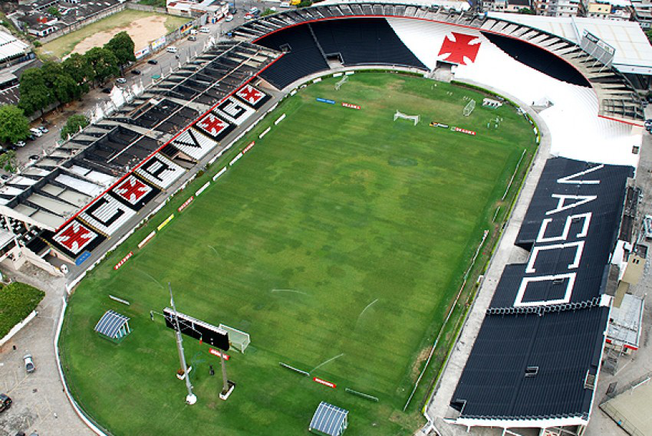
The construction of São Januário represented a historic achievement for Vasco and for Brazilian sport (Photo: Vasco)
São Januário Stadium, home of Rio de Janeiro–based club Vasco da Gama, is one of the most traditional venues in Brazilian football.
Located in the São Cristóvão neighbourhood, in the northern zone of Rio de Janeiro, the stadium holds significance that goes far beyond sport.
Inaugurated on April 21, 1927, the Vasco landmark left a lasting mark on the political and cultural history of football in Brazil.
The construction of São Januário Stadium and its historical significance
The construction of São Januário represented a historic achievement for Vasco da Gama and for Brazilian sport as a whole. At a time marked by strong elitism in football, the club faced reprisals for refusing to exclude Black and working-class players from its squad – a movement that was called “Camisas Negras”.
One of the most commonly used justifications to frequently punish the team was the lack of a stadium of its own. To prove its value, strength, and sense of belonging, the club’s leadership launched a fundraising campaign to raise the amount needed to build what would become its future home.
Built in just ten months – a record time for the era – São Januário was considered the largest stadium in Latin America for three years, until the inauguration of the Centenario Stadium in Uruguay.
Its monumental architecture, with features inspired by the neo-colonial style, reflected the grandeur of the project and Vasco’s ambition to establish itself as a sporting and social powerhouse.
Here’s an interesting fact: the stadium’s official name is Estádio Vasco da Gama. The name that became popular among the people simply comes from the street where the stadium is located—Rua São Januário.
São Januário: stage for historic matches and unforgettable moments
Throughout its history, São Januário has hosted matches that marked generations of fans. The venue has staged memorable games in the Brazilian Championship, the Rio de Janeiro State Championship, and international competitions, as well as matches involving the Brazilian national team.

São Januário resists as a traditional stadium in an era of multi-purpose arenas with synthetic pitches (Photo: Vasco)
Among its most emblematic moments is the match against Arsenal Football Club of England on May 25, 1949. The reigning English champions were touring Brazil at the time, something common in that era. After victories over Fluminense and Corinthians and a draw against Palmeiras, it was the Gunners’ turn to face the Cruzmaltino side.
With more than 60,000 people in the stands – still the stadium’s all-time attendance record – Vasco da Gama defeated Arsenal 1–0, with a goal scored by Nestor.
Political and cultural importance of São Januário Stadium
São Januário also holds a unique place in Brazil’s political history.
The stadium was the stage for historic speeches, including addresses by President Getúlio Vargas, who announced major labour measures there, such as the laws that would later form the basis of the CLT (Brazil’s Consolidation of Labour Laws). For this reason, the venue is often remembered as a space where football, politics, and society intersect.
In addition, Vasco da Gama’s home has hosted civic events, religious celebrations, and cultural gatherings.
In an era of multi-purpose arenas with synthetic pitches designed for products beyond football, São Januário exists, or rather, resists, as a traditional stadium, created to move and unite people passionate about football, not only Vasco da Gama supporters.
There is no denying it: the Cruzmaltino stadium is a historic heritage site not only of the city of Rio de Janeiro, but of Brazil itself.